

Buy Multi Frequency Metal Detector: Buyer Guide 2026

When you plan to Buy Multi Frequency Metal Detector equipment, you should compare how the device uses its frequencies, the targets it is designed to detect, its performance in different soil conditions, and the support included with the purchase. Multi-frequency technology can be a practical option for users who search for gold, coins, jewelry, relics, and other metals across changing environments.
However, not every detector described as multi-frequency operates in the same way. Some models allow the operator to choose one frequency at a time, while others process multiple frequencies simultaneously. This difference can affect target sensitivity, ground stability, discrimination, and overall field performance.
European Technology Group provides professional detection systems, product guidance, training, warranty options, technical support, and international shipping. Comparing the full package before ordering helps you select a detector that matches your targets, terrain, experience, and budget.
What Is a Multi Frequency Metal Detector?
A multi-frequency metal detector is a search device that can operate using more than one detection frequency. Depending on the model, the detector may allow the user to select individual frequencies or use several frequencies at the same time.
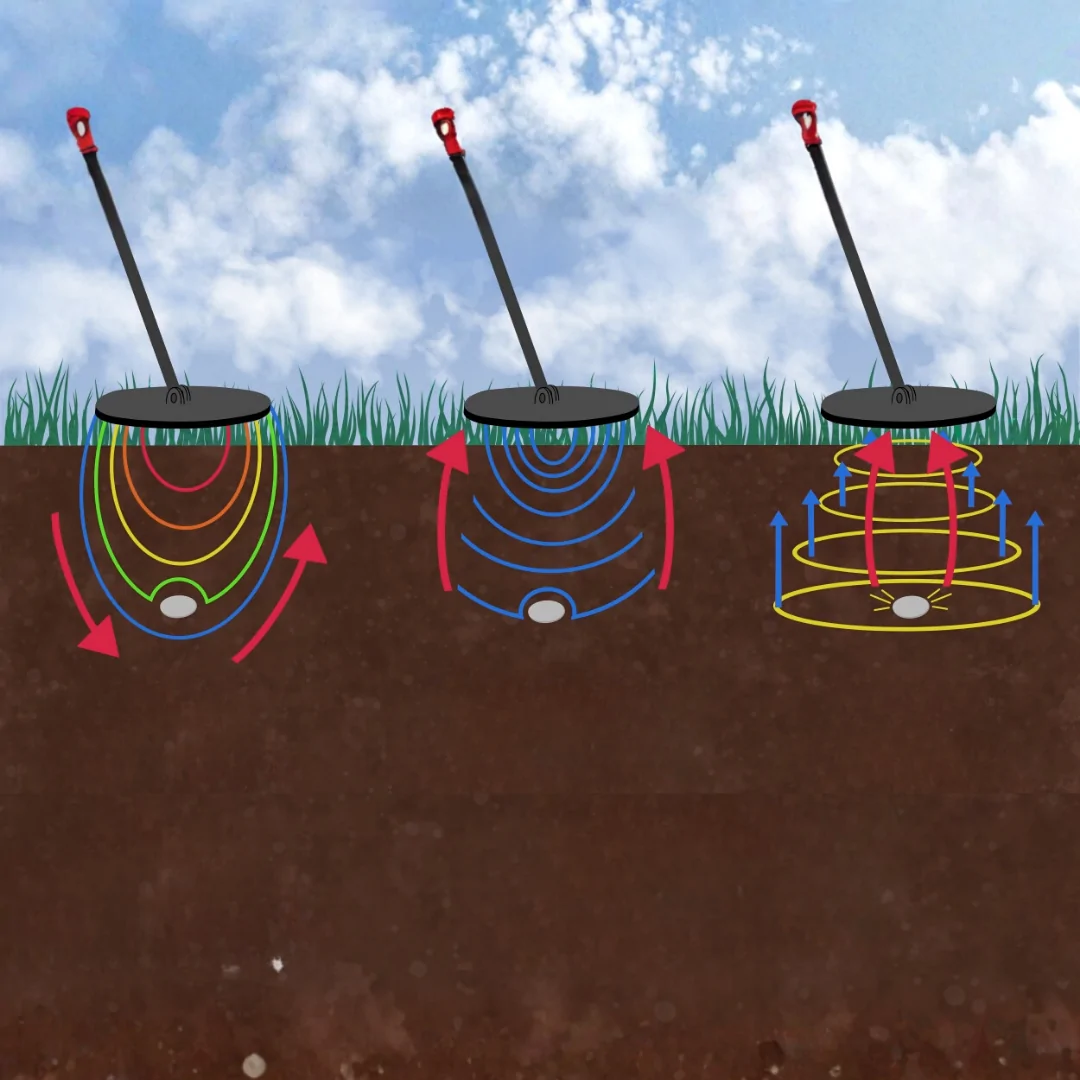
Different frequencies can respond differently to underground targets.
Lower frequencies are generally associated with a strong response to larger and highly conductive objects. Higher frequencies may improve sensitivity to smaller or lower-conductive targets, including small gold pieces and thin jewelry.
A multi-frequency system aims to provide broader performance across different target types and search environments.
It may be used to search for:
- Natural gold.
- Gold jewelry.
- Coins.
- Silver objects.
- Ancient relics.
- Ferrous metals.
- Non-ferrous metals.
- Small metallic targets.
- Large buried objects.
- Targets in mineralized or salty soil.
The term “multi-frequency” should not automatically be treated as proof that one detector is better than every single-frequency model. A specialized detector may still provide excellent results when it is designed for a specific target and terrain.
Buyers should ask how the detector uses its frequencies and whether they are selectable, adjustable, or processed simultaneously.
You can compare available Multi frequency detectors to understand the different systems before selecting a particular model.
Who Should Buy This Detector?

A multi-frequency detector can be suitable for buyers who search for several target types or work in locations where soil conditions change frequently.
It may be a practical choice for:
- Gold prospectors searching for different nugget sizes.
- Coin and jewelry hunters.
- Relic hunters.
- Beach detectorists.
- Travelers working in multiple countries.
- Professional search teams.
- Users who want several search modes in one device.
- Buyers searching in dry, wet, salty, or mineralized ground.
- Detectorists who need target discrimination.
- Users who want to reduce the number of separate detectors they carry.
An all terrain detector can be valuable for users who move between parks, fields, beaches, deserts, mountains, and historical sites. However, the exact model must be designed for the intended conditions.
A detector that performs well on dry sand may not provide the same stability in wet saltwater areas. Similarly, a machine designed for coins and jewelry may not be the ideal choice for large deeply buried treasure.
A gold and coin detector may be suitable when the user wants sensitivity to small gold while maintaining useful discrimination for coins and common metals.
Before purchasing, define your main search objective.
| Search objective | Multi-frequency suitability |
|---|---|
| Coins and jewelry | Usually highly suitable |
| Small natural gold | Suitable when the frequency range and coil support it |
| Beach and wet salt searches | Suitable when the model includes effective salt handling |
| Relics and ancient objects | Suitable with the correct search mode |
| Large deep targets | Depends on the detector, coil, and technology |
| Highly mineralized soil | Can be suitable with effective ground adjustment |
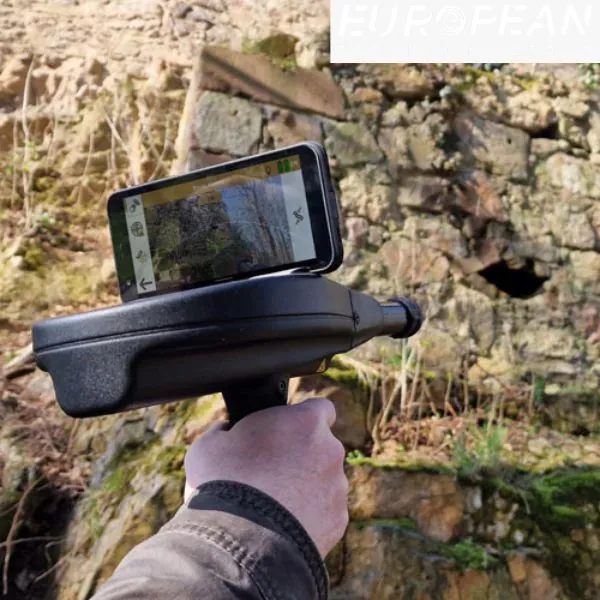
| Underground cavities | Requires a ground scanner rather than a standard detector |
| Professional mixed-target searches | Often suitable |
Users who work on specialized projects should also compare other categories of Professional detectors before making a final decision.
Main Technologies and Search Modes
Understanding the difference between multi-frequency technologies is essential before ordering.
Selectable Frequency Technology
A selectable-frequency detector provides several operating frequencies, but the operator normally chooses one frequency at a time.
For example, the user may select a lower frequency for larger conductive targets or a higher frequency for small gold.
The advantages may include:
- Greater control over the selected frequency.
- Ability to adapt to different target types.
- Reduced interference by changing frequency.
- Specialized operation for coins, gold, or relics.
- Potentially simpler processing than simultaneous systems.
The limitation is that the detector is still operating on one selected frequency during the search.
Simultaneous Multi-Frequency Technology
A simultaneous multi-frequency detector transmits or processes information from several frequencies during the same search.
The system then analyzes the combined responses to improve target information and ground handling.
Potential advantages include:
- Broader response to different target sizes.
- Improved operation in changing ground conditions.
- Better stability in some salty environments.
- Useful discrimination across several target categories.
- Reduced need to select a single frequency manually.
The exact performance depends on the detector’s design and software. Not every simultaneous system uses the same number of frequencies or processes them in the same way.
Frequency Shift
Frequency shift is different from true selectable or simultaneous multi-frequency technology.
This function allows the operator to make small changes to the operating channel to reduce electrical interference from nearby detectors, power lines, communication equipment, or other electronic sources.
It does not necessarily provide different detection characteristics for different target types.
Common Detector Modes
A professional metal detector may include several modes, such as:
- Gold mode.
- Coin mode.
- Jewelry mode.
- Relic mode.
- Beach mode.
- Field mode.
- Park mode.
- All-metal mode.
- Deep mode.
- Pinpoint mode.
- Custom mode.
- Iron discrimination mode.
The number of detector modes should not be the only purchasing factor. Buyers should understand what each mode changes.
A search mode may adjust:
- Frequency processing.
- Ground balance.
- Recovery speed.
- Target discrimination.
- Audio tones.
- Sensitivity.
- Iron rejection.
- Target identification.
- Salt handling.
- Signal filtering.
A detector with fewer well-designed modes may be easier and more effective than a device with many confusing programs.
Depth Expectations and Soil Conditions
Detection depth depends on several factors and cannot be represented by one guaranteed number.
A large metallic object normally produces a stronger signal than a small coin or gold nugget. The same detector may identify these targets at very different depths.
The main factors affecting depth include:
| Depth factor | Possible effect |
|---|---|
| Target size | Larger objects usually generate stronger signals |
| Target metal | Conductivity affects the detector response |
| Target orientation | Flat and vertical targets may respond differently |
| Burial depth | Deeper targets normally produce weaker signals |
| Soil mineralization | Can reduce stability and identification accuracy |
| Ground moisture | May improve or reduce performance depending on conditions |
| Salt content | Can create conductive ground responses |
| Search coil | Coil size and design influence depth and sensitivity |
| Frequency | Different frequencies favor different target characteristics |
| Sensitivity | Excessive settings may create false signals |
| Recovery speed | Fast settings may influence deep-target response |
| Operator technique | Sweep speed and coil height affect detection |
Mineralized Soil
Mineralized soil contains naturally occurring materials that may produce their own electromagnetic responses.
Common examples include iron-rich ground, volcanic soil, hot rocks, gold-bearing terrain, and some desert or mountain regions.
A capable detector may provide:
- Automatic ground balance.
- Manual ground balance.
- Ground tracking.
- Mineralization indicators.
- Ground-noise reduction.
- Adjustable recovery speed.
- Specialized gold or field modes.
Multi-frequency operation can improve stability in some difficult environments, but the detector must still be balanced and adjusted correctly.
The user should avoid operating at maximum sensitivity when the ground is unstable. A slightly lower but stable sensitivity level can provide clearer target signals.
Wet Salt and Beach Conditions
Wet salt can create a broad conductive response that affects some detector technologies.
A multi-frequency detector designed for beach use may process the ground response more effectively than a basic single-frequency model. However, beach mode alone does not guarantee that every detector is suitable for underwater or wet-salt use.
Buyers should confirm:
- Whether the detector is designed for wet salt.
- Whether the coil is waterproof.
- Whether the control unit can be submerged.
- The permitted submersion depth.
- Whether wireless headphones work underwater.
- Whether a special beach mode is included.
- Whether ground balance is automatic or adjustable.
Electrical Interference
Electrical interference can reduce stability and produce false signals.
Common sources include:
- Power lines.
- Mobile phones.
- Radio transmitters.
- Electric fences.
- Underground cables.
- Nearby detectors.
- Vehicles.
- Industrial machinery.
Changing the operating channel, reducing sensitivity, adjusting recovery speed, or moving away from the interference source may improve stability.
Key Features to Compare Before Buying
When you Buy Multi Frequency Metal Detector equipment, compare the features that support your actual search requirements.
Frequency Operation
Ask whether the detector offers:
- Selectable frequencies.
- Simultaneous multi-frequency.
- Frequency shift.
- One fixed frequency with several channels.
- Specialized frequency profiles for different modes.
These terms are not interchangeable.
A seller should clearly explain how the system operates rather than using “multi-frequency” as a general marketing phrase.
Ground Balance
Ground balance helps the detector reduce natural ground signals and identify metallic targets more clearly.
Common options include:
- Automatic ground balance.
- Manual ground balance.
- Ground tracking.
- Ground grab.
- Fixed ground balance.
- Mineralization measurement.
Automatic adjustment is useful for beginners, while manual settings may provide experienced operators with greater control.
Target Identification
Target identification may be displayed as a number, symbol, metal category, or visual scale.
It can help the operator estimate whether a signal may be iron, foil, gold, jewelry, coins, or another material.
However, identification accuracy may decrease when:
- The target is deeply buried.
- The object is very small.
- Several metals are close together.
- The ground is highly mineralized.
- The target is positioned vertically.
- Sensitivity is unstable.
- The coil passes over the target incorrectly.
Important signals should be checked from multiple directions before being rejected.
Discrimination and Notch Settings
Discrimination allows the detector to reduce or reject responses from certain target categories.
Notch discrimination enables the user to accept or reject a specific part of the target identification range.
These features can save time in areas containing large amounts of metal waste, but aggressive rejection may hide valuable targets.
Gold jewelry, small nuggets, foil, and lead may produce overlapping identification values. The user should therefore apply discrimination carefully.
Recovery Speed
Recovery speed determines how quickly the detector can respond to separate targets.
A faster recovery speed may help identify objects positioned close together in contaminated areas. However, extremely fast settings may reduce response to some deeper targets.
A slower setting may improve depth in clean soil but can make it harder to distinguish targets located near iron.
Audio Settings
Audio information is important even when the detector includes a detailed screen.
Compare whether the detector offers:
- Multiple target tones.
- Adjustable threshold.
- Iron audio.
- Volume control.
- Tone-break adjustment.
- Audio-response strength.
- Wireless headphones.
- Vibration alerts.
- Pitch adjustment.
Experienced users often identify subtle target differences through audio before checking the screen.
Waterproofing
The term waterproof may refer only to the search coil or to the complete detector.
Confirm:
- Whether the control unit is waterproof.
- The maximum permitted depth.
- Whether the battery compartment is sealed.
- Whether headphones require a special connector.
- Whether the warranty covers water damage.
- Whether charging ports require protective caps.
Weight and Ergonomics
A detector may be used for several hours in one search session.
Compare:
- Total assembled weight.
- Shaft material.
- Armrest adjustment.
- Handle angle.
- Control unit position.
- Coil balance.
- Collapsed transport length.
- Ease of assembly.
A well-balanced detector can feel lighter and more comfortable than a poorly balanced device with a similar listed weight.
Battery Performance
Confirm the expected operating time under normal field conditions.
Battery performance may be affected by:
- Screen brightness.
- Wireless headphones.
- Operating mode.
- Temperature.
- Battery age.
- Search duration.
- Audio volume.
Ask whether the battery is replaceable, whether a spare can be purchased, and whether the detector can be charged using a power bank or car adapter.
Accessories, Coils, and Package Options
The package contents can significantly influence the final value of the detector.
A standard package may include:
- Main control unit.
- Search coil.
- Coil cover.
- Shaft.
- Armrest.
- Rechargeable battery.
- Charging cable.
- Power adapter.
- Headphones.
- Carrying bag.
- User manual.
- Warranty certificate.
- Training materials.
- Serial-number documentation.
Small Search Coils
A small coil may provide:
- Better target separation.
- Improved control around obstacles.
- Greater sensitivity to small objects.
- Reduced ground coverage.
- Easier pinpointing.
Small coils are useful in locations containing iron, rubbish, rocks, bushes, and closely positioned targets.
Standard Search Coils
A standard coil provides balanced performance for general searches.
It can be suitable for:
- Coins.
- Jewelry.
- Relics.
- Medium-sized gold.
- Parks.
- Fields.
- Dry beaches.
Large Search Coils

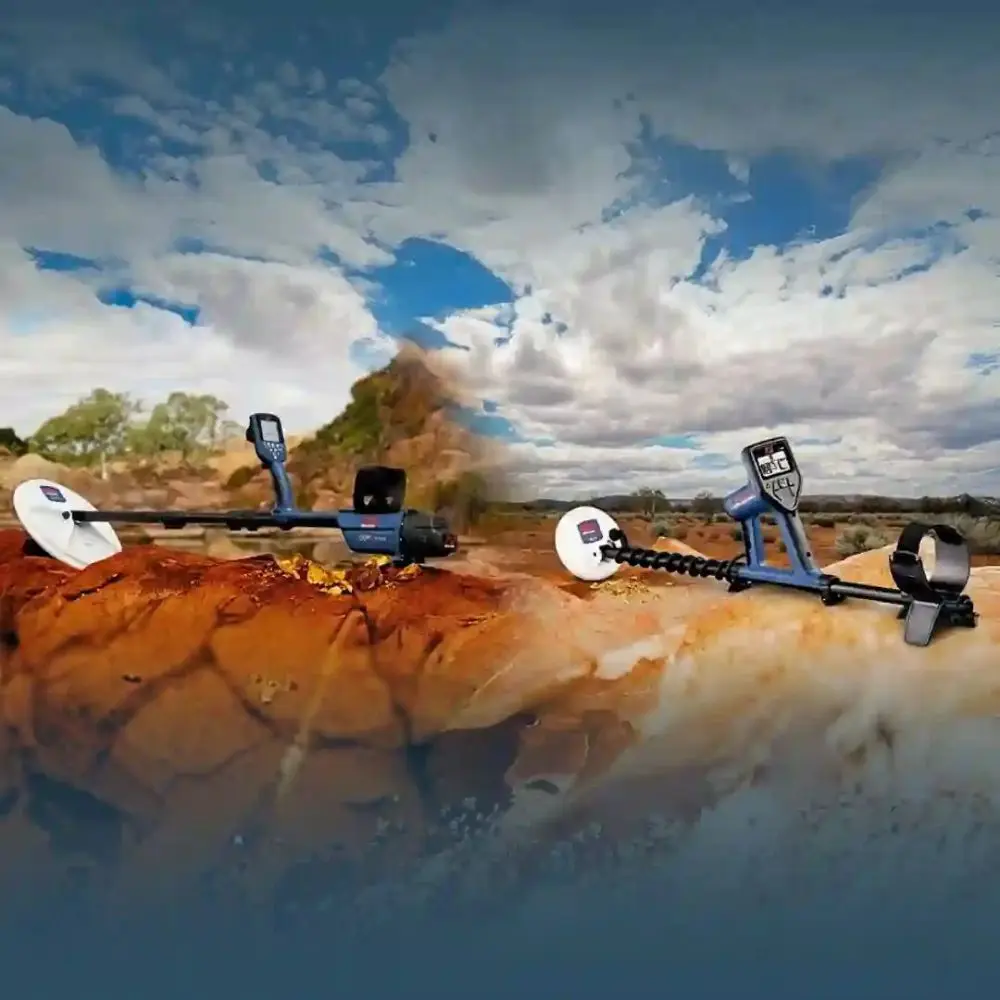
Minelab GPZ 8000 professional detector for gold and metal detecting in the field.
A large coil may offer:
- Wider ground coverage.
- Improved response to larger targets.
- Potentially greater depth on suitable objects.
Its limitations may include:
- Greater weight.
- Reduced sensitivity to tiny targets.
- Increased ground response.
- Greater sensitivity to interference.
- More difficult use in contaminated areas.
| Coil type | Main advantage | Possible limitation |
|---|---|---|
| Small coil | Target separation and small-object sensitivity | Limited coverage and large-target depth |
| Standard coil | Balanced general performance | Not specialized for every search |
| Large coil | Coverage and response to large targets | Added weight and reduced separation |
| Elliptical coil | Easier movement between obstacles | Performance varies by design |
| Double-D coil | Stable ground coverage | Pinpointing pattern may require practice |
Before ordering, confirm whether additional coils are compatible with the exact detector model.
Ask whether changing coils requires:
- Software updates.
- Frequency changes.
- New calibration.
- Special settings.
- Additional adapters.
- Separate charging accessories.
Do not assume that all coils shown in product images are included in the standard package.
Warranty, Training, and Technical Support
A professional detector should be supplied with clear purchase and warranty documentation.
Before paying, confirm:
- Warranty duration.
- Warranty provider.
- Covered detector components.
- Coil coverage.
- Battery coverage.
- Charger and accessory coverage.
- Repair location.
- Return-shipping responsibility.
- Availability of replacement parts.
- Exclusions for physical or water damage.
- Firmware and software support.
The invoice should clearly identify the detector model, package, purchase date, and serial number.
Professional Detector Training
Training can help the buyer understand the difference between frequencies, modes, target identification, ground adjustment, and audio responses.
Training should cover:
- Detector assembly.
- Coil installation.
- Battery charging.
- Selecting search modes.
- Choosing frequencies.
- Ground balancing.
- Adjusting sensitivity.
- Setting recovery speed.
- Using discrimination.
- Reading target identification.
- Understanding audio tones.
- Maintaining coil height.
- Using correct sweep speed.
- Pinpointing targets.
- Reducing interference.
- Cleaning and storage.
Beginners should practice with known targets before beginning a professional field search.
A practical training area can include:
- Small gold.
- Coins.
- Silver.
- Iron.
- Aluminum.
- Targets at different depths.
- Objects positioned horizontally and vertically.
This allows the user to learn how signals change according to target type and position.
Technical Support
Reliable Technical support is an important part of a professional purchase.
Support may be required when:
- The detector produces unstable signals.
- The user cannot complete ground balance.
- A search coil is not recognized.
- Wireless headphones do not connect.
- Firmware needs updating.
- The buyer needs help selecting a mode.
- A replacement charger or battery is required.
- An accessory must be ordered.
- The detector needs inspection or repair.
Technical support should be available after delivery, especially during the buyer’s first field tests.
Worldwide Shipping and Delivery Notes
International buyers should review all shipping terms before completing payment.
The delivery process may include:
- Order preparation.
- Device inspection.
- Secure packaging.
- Battery documentation.
- Carrier collection.
- International transportation.
- Customs clearance.
- Local delivery.
Confirm the following information:
| Shipping detail | What the buyer should check |
|---|---|
| Destination | Delivery availability to the country and city |
| Carrier | Shipping company and tracking service |
| Processing time | Period required to prepare the order |
| Transit estimate | Expected shipping duration |
| Insurance | Coverage for loss or physical damage |
| Customs duties | Whether local charges are paid by the buyer |
| Taxes | Possible value-added or import taxes |
| Battery restrictions | Whether special transport rules apply |
| Package inspection | Procedure for reporting damage |
| Missing accessories | Time allowed to submit a claim |
Provide a complete shipping address, including:
- Full name.
- Country.
- City.
- District.
- Street address.
- Postal code.
- Telephone number.
- Email address.
When the package arrives:
- Inspect the external box.
- Photograph any visible damage.
- Check the security seals.
- Compare the contents with the invoice.
- Confirm the serial number.
- Test the detector and charger.
- Check the search coil and cable.
- Keep the packaging until testing is complete.
Customs rules differ between countries. Buyers should confirm local duties and import requirements before ordering.
Price, Payment Plans, and Quote Process
The price of a multi-frequency detector depends on the technology, frequency system, search modes, waterproofing, coil package, battery, warranty, training, and technical support.
A professional detector may cost more than a basic hobby model, but the price should be evaluated according to the complete package.
Compare:
| Purchase component | Details to confirm |
|---|---|
| Detector | Exact model, technology, and version |
| Frequencies | Selectable or simultaneous operation |
| Search modes | Gold, coins, beach, relics, and custom modes |
| Search coil | Size, design, and quantity |
| Accessories | Headphones, charger, case, and coil cover |
| Warranty | Duration and covered parts |
| Training | Type of instruction included |
| Support | Post-purchase technical assistance |
| Shipping | Cost, carrier, and insurance |
| Customs | Whether charges are included or paid locally |
Before requesting a quotation, prepare the following information:
- Primary target.
- Additional target types.
- Expected target size.
- Search country.
- Soil mineralization.
- Beach, desert, mountain, or field use.
- Experience level.
- Preferred search coil.
- Waterproofing requirements.
- Available budget.
- Delivery location.
Use the Request a quote page to receive a recommendation based on your search conditions.
The written quotation should identify:
- Exact detector model.
- Included search coil.
- Full accessory list.
- Warranty conditions.
- Training options.
- Technical support.
- Shipping cost.
- Payment method.
- Estimated delivery period.
- Customs responsibility.
Avoid making payment before confirming the seller, invoice, package contents, warranty, and shipping conditions.
Buyers can also compare other categories of Metal detectors to ensure that multi-frequency technology is the correct choice.
Final Buying Checklist and FAQs
Before you Buy Multi Frequency Metal Detector equipment, complete this checklist:
- Define your main target.
- List any additional target types.
- Identify the expected target size.
- Review soil mineralization.
- Confirm whether the device uses selectable or simultaneous frequencies.
- Compare the available detector modes.
- Check ground balance options.
- Review target identification.
- Understand discrimination limitations.
- Compare recovery-speed settings.
- Select a suitable search coil.
- Confirm waterproofing specifications.
- Review detector weight and balance.
- Check battery operating time.
- Request the complete package list.
- Confirm the warranty conditions.
- Arrange professional training.
- Check technical support availability.
- Review international shipping terms.
- Confirm local customs and taxes.
- Request a written quotation.
- Avoid unrealistic depth guarantees.
- Verify the detector serial number after delivery.
What is the difference between selectable and simultaneous multi-frequency?
A selectable-frequency detector allows the operator to choose one frequency at a time. A simultaneous multi-frequency detector processes information from several frequencies during the same search.
Is a multi-frequency detector suitable for gold?
Yes, when the detector includes frequencies, coils, and search modes suitable for gold. Performance depends on the gold size, soil, ground balance, and operator settings.
Can one detector find both gold and coins?
Many multi-frequency detectors are designed to search for gold, coins, jewelry, and relics. Buyers should confirm that the exact model provides the required sensitivity and modes.
Is multi-frequency technology better than single frequency?
It can provide greater flexibility across different targets and ground conditions. However, a specialized single-frequency detector may perform very well for a particular target or environment.
How deep can a multi-frequency detector detect?
There is no fixed depth for every target. Depth depends on the target size, metal, position, soil, coil, settings, frequency processing, and operator technique.
Can a multi-frequency detector work on wet salt beaches?
Some models are designed to handle wet salt effectively. Buyers should confirm that the exact detector includes suitable beach modes and waterproofing.
Does multi-frequency technology improve target identification?
It can provide additional target information, but identification is never guaranteed. Deep targets, mineralization, nearby metals, and target position can affect the reading.
Which search coil should I choose?
A small coil is useful for target separation and small objects, a standard coil provides balanced performance, and a large coil offers wider coverage and may improve response to larger targets.
Do I need professional training?
Training is recommended, especially for understanding frequencies, search modes, ground balance, recovery speed, audio tones, and target identification.
Can I order a professional detector internationally?
International shipping may be available depending on the destination. Confirm customs duties, taxes, insurance, battery restrictions, tracking, and delivery terms before payment.
What should be included in the detector package?
A package may include the detector, search coil, shaft, coil cover, battery, charger, headphones, carrying case, manual, training materials, and warranty documents.
How can I select the right model before ordering?
Provide the seller with information about your targets, terrain, soil, experience, waterproofing needs, preferred coil, budget, and delivery country. This allows a more accurate recommendation.
A multi-frequency detector can provide flexible performance for users who search for several types of targets in changing environments. When you decide to Buy Multi Frequency Metal Detector, prioritize the correct frequency technology, practical detector modes, reliable ground balance, suitable coils, realistic depth expectations, professional training, warranty protection, and dependable technical support.