





Buy VLF Gold Detector: Best Uses and Buying Tips Now

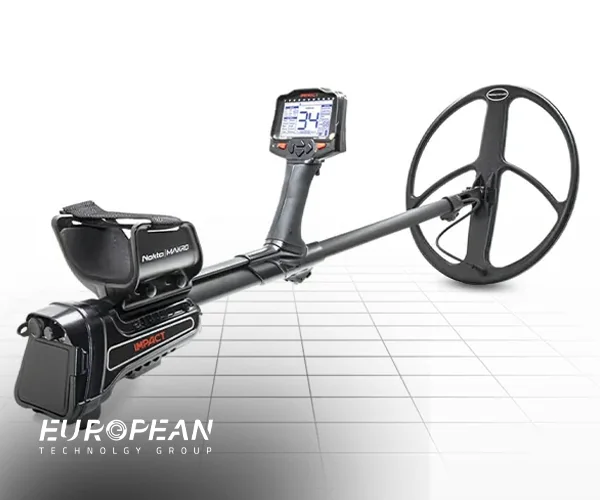
When you plan to Buy VLF Gold Detector equipment, the best choice depends on the size of the gold you want to find, soil mineralization, operating frequency, search coil, ground balance system, and your level of experience. VLF detectors are popular among prospectors because they can provide excellent sensitivity to small gold nuggets while offering useful target identification and discrimination features.
However, not every VLF system is designed for the same purpose. Some models focus on natural gold prospecting, while others are better suited to coins, jewelry, relics, and general metal detection.
European Technology Group provides professional detector options, purchasing guidance, training, warranty support, and worldwide delivery. Comparing the main features before ordering will help you select a practical detector without relying on exaggerated depth claims.
What Is a VLF Gold Detector?
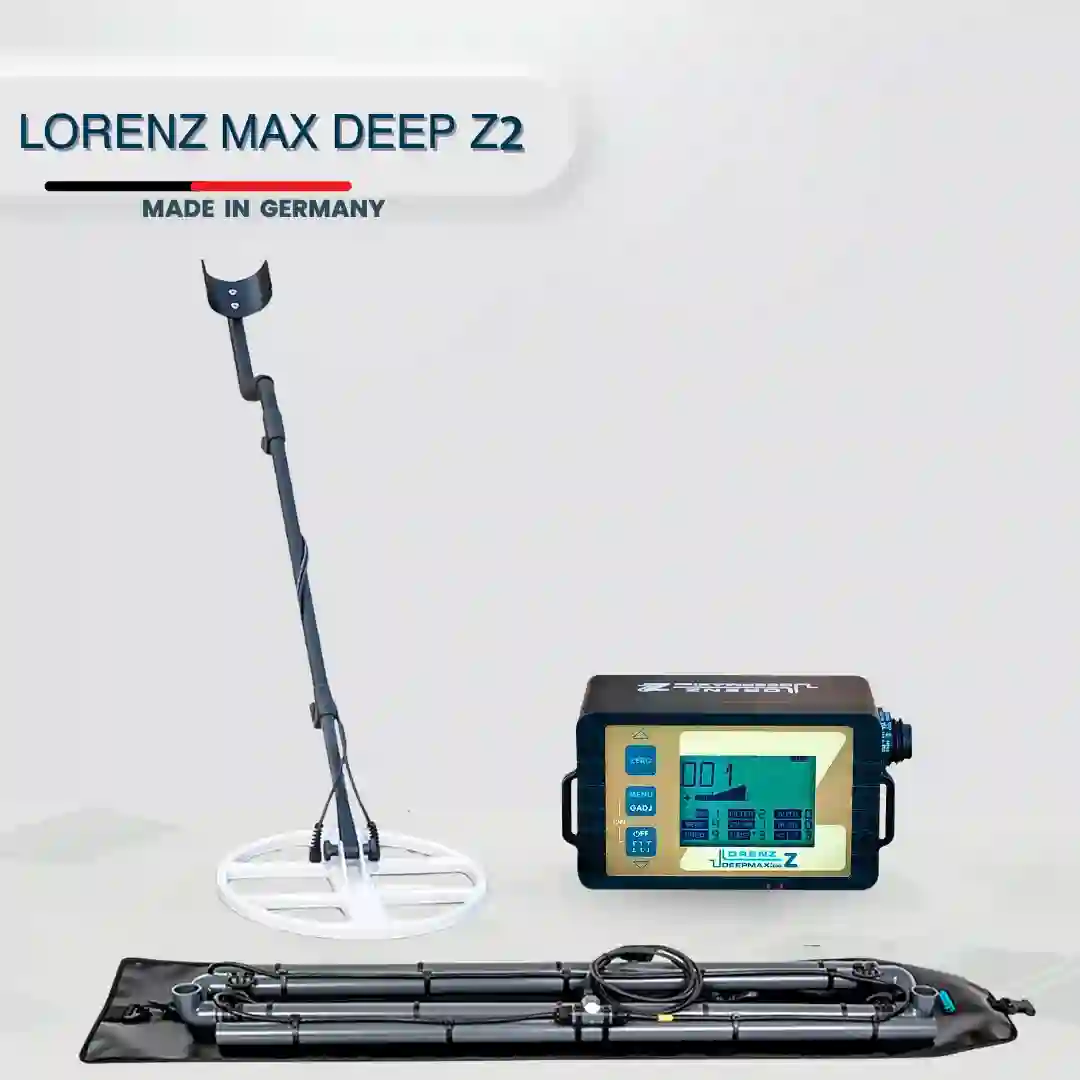
pi vs vlf detector
A VLF gold detector is a metal detection device that operates using Very Low Frequency technology. It normally uses a transmitting coil to send a continuous electromagnetic signal into the ground and a receiving coil to analyze changes caused by metallic objects.
When the electromagnetic field interacts with a target, the detector produces an audio, visual, or numerical response. The operator can then assess whether the signal may represent gold, iron, coins, jewelry, or another metallic object.
VLF technology is commonly used for:
- Small natural gold nuggets.
- Shallow and medium-depth targets.
- Coins and jewelry.
- Ancient relics.
- Ferrous and non-ferrous metals.
- Gold-bearing soil.
- Parks, fields, and dry ground.
- Locations containing multiple target types.
A high frequency detector is often selected for natural gold prospecting because higher operating frequencies can improve sensitivity to very small conductive targets. However, frequency alone does not determine overall performance.
Search coil size, ground balance, mineralization handling, detector stability, and operator technique also influence the final result.
You can compare professional VLF gold detectors according to your target size, terrain, and experience level.
Who Should Buy This Detector?
A VLF detector is a suitable choice for buyers who want a responsive, lightweight, and relatively easy-to-use system for small gold and general metal detection.
It may be appropriate for:
- Beginners learning gold prospecting.
- Users searching for small gold nuggets.
- Hobbyists searching for coins and jewelry.
- Prospectors working in low or moderate mineralization.
- Buyers who need target discrimination.
- Users who prefer a lightweight detector.
- Travelers who need portable equipment.
- Detectorists working in areas containing metallic waste.
- Buyers who want visual target identification.
A beginner gold detector should provide clear controls, automatic or simple ground balance, stable audio, and practical sensitivity settings. Too many complicated modes may make the learning process more difficult without providing immediate value.
VLF systems are particularly useful when the search area contains iron, bottle caps, aluminum, and other unwanted metals. Discrimination features may help users identify or reject some undesirable targets.
However, discrimination should be used carefully during natural gold searches. Small gold can sometimes produce responses similar to foil, lead, or other low-conductive metals. Rejecting every weak or low-number signal may cause the operator to miss valuable targets.
Before buying, define your primary objective:
| Search objective | Is VLF suitable? |
|---|---|
| Small natural gold nuggets | Often highly suitable |
| Coins and jewelry | Highly suitable |
| Shallow relics | Suitable |
| Large deeply buried treasure | May require another technology |
| Highly mineralized ground | Depends on the model and settings |
| Saltwater beach detecting | Requires a suitable specialized model |
| Detailed target discrimination | Usually suitable |
| Underground cavities and tunnels | A ground scanner is generally more appropriate |
Buyers can review different Gold detectors before deciding whether VLF, pulse induction, multi-frequency, or ground-scanning technology is the better investment.
Main Technologies and Search Modes
Although VLF detectors use a similar operating principle, their frequency, software, search modes, and ground-handling features can vary significantly.
Single-Frequency VLF Detectors
A single-frequency detector operates at one primary frequency. Lower frequencies may provide a stronger response to larger and more conductive targets, while higher frequencies may improve sensitivity to small gold and low-conductive objects.
The best frequency depends on the target and soil.
| Frequency approach | Common advantage | Main consideration |
|---|---|---|
| Lower-frequency VLF | Good response to larger conductive targets | May be less sensitive to tiny gold |
| Mid-frequency VLF | Balanced performance for coins, relics, and general detecting | May not specialize in one target type |
| High-frequency VLF | Strong sensitivity to small gold nuggets | Can respond more strongly to mineralization |
| Adjustable frequency | Allows adaptation to different targets or interference | Available adjustments vary by model |
| Multi-frequency technology | Processes several frequencies for broader applications | Usually belongs to a different price and technology category |
A detector described as high frequency is not automatically the best option in every location. Highly mineralized ground can create additional noise, especially when sensitivity is set too high.
Common Search Modes
A VLF gold detector may include:
- Gold prospecting mode.
- All-metal mode.
- Coin mode.
- Jewelry mode.
- Relic mode.
- Custom search mode.
- Pinpoint mode.
- Iron discrimination.
- Ground tracking.
- Notch discrimination.
All-metal mode generally provides maximum response to metallic targets and can be useful during gold prospecting. Discrimination modes can help reduce unwanted signals, but they may also reduce sensitivity to certain weak or deeply buried targets.
Motion and Non-Motion Modes
Many VLF detectors require the coil to move across the target to generate a clear signal. Pinpoint or non-motion modes may allow the operator to center the target more accurately after detection.
The buyer should understand which modes are intended for initial searching and which are intended for target confirmation.
Depth Expectations and Soil Conditions
Detection depth should always be discussed in relation to the target and search environment.
A VLF detector cannot provide one guaranteed depth for every object. A large coin, a small gold nugget, and a large metal container will produce very different responses.
Important depth factors include:
| Depth factor | Effect on performance |
|---|---|
| Target size | Larger objects usually create stronger signals |
| Gold size | Tiny nuggets may only be detected at shallow depth |
| Target position | Flat and vertical objects may respond differently |
| Soil mineralization | Can reduce stability and usable depth |
| Search coil | Size and design affect sensitivity and coverage |
| Operating frequency | Influences response to different target sizes |
| Sensitivity | Excessive settings can create false signals |
| Ground balance | Incorrect adjustment can hide weak targets |
| Sweep speed | Moving too quickly may miss small signals |
| Coil height | Lifting the coil reduces effective detection depth |
| Electrical interference | Can cause noise and unstable readings |
| Operator experience | Signal interpretation improves with practice |
Small Gold Nugget Detection
A small nugget detector should be capable of responding to very weak targets. However, sensitivity depends on the actual size, purity, shape, and position of the nugget.
Tiny or irregular gold pieces can produce short and subtle audio signals. The operator should use slow, overlapping sweeps and keep the coil close to the ground.
The search area may need to be scanned from more than one direction. A signal that disappears after changing direction may be caused by mineralization, but it should still be checked carefully.
Mineralized Soil
Gold-bearing regions often contain iron minerals and hot rocks. These natural materials can create signals that resemble metal targets.
A reliable ground balance detector helps reduce the effect of mineralization. Depending on the model, the detector may offer:
- Automatic ground balance.
- Manual ground balance.
- Ground tracking.
- Ground mineralization indicators.
- Ground grab or quick balance.
- Adjustable threshold.
- Iron mineral rejection.
Ground balance does not remove every natural ground response. The operator must still learn to recognize broad, inconsistent, or position-dependent signals.
Wet and Salty Soil
Standard single-frequency VLF detectors may become unstable on wet salt beaches because conductive salt can create a ground response.
Some models include beach settings or frequency options designed to improve stability. However, buyers who intend to search regularly in wet saltwater conditions should compare the exact device specifications carefully.
A waterproof search coil does not mean that the control unit is waterproof. Confirm the permitted submersion depth before using the detector near water.
Key Features to Compare Before Buying
When you Buy VLF Gold Detector equipment, focus on features that improve actual field performance rather than selecting a detector because it has the largest screen or the greatest number of menu options.
Operating Frequency
Frequency is especially important when searching for small gold.
Higher frequencies can improve sensitivity to tiny or low-conductive targets. Lower frequencies may perform well on larger and more conductive targets.
Some detectors allow the user to shift the frequency slightly to reduce interference, while others offer several selectable frequencies.
Ask whether the detector operates on:
- One fixed frequency.
- Several selectable frequencies.
- Frequency-shift channels.
- True simultaneous multi-frequency technology.
These terms are not identical, so the seller should explain exactly how the device operates.
Ground Balance

A good ground balance system can improve stability and help the user hear weak gold signals.
Automatic ground balance is convenient for beginners. Manual ground balance gives experienced users greater control. Ground tracking can be helpful when soil conditions change across the search area.
Sensitivity Control
Sensitivity should be adjusted to the highest stable level, not automatically set to maximum.
Excessive sensitivity may cause:
- False signals.
- Unstable target identification.
- Responses from mineralized soil.
- Electrical interference.
- Difficulty identifying real targets.
A stable detector at a slightly lower sensitivity setting can provide better practical performance than an unstable detector at maximum power.
Target Identification
Visual target identification may display a number, category, or symbol. These indicators can help classify targets, but their accuracy may decrease with depth, mineralization, and target orientation.
Gold does not have one universal target identification number. Small nuggets may appear in the same range as foil, lead, or small aluminum pieces.
Iron Discrimination
Iron discrimination can reduce unnecessary digging in contaminated areas. However, aggressive rejection may hide valuable targets positioned close to iron.
During serious gold prospecting, many users prefer to investigate repeatable signals rather than depend entirely on discrimination.
Audio Options
Audio is one of the most important tools for finding small gold.
Compare whether the detector offers:
- Adjustable threshold.
- Multiple tones.
- Iron audio.
- Volume control.
- Wireless headphones.
- Audio response adjustment.
- Target-strength audio.
- Vibration alerts.
A faint but repeatable audio change may represent a small or deep target even when the screen information is uncertain.
Weight and Ergonomics
A lightweight detector can reduce fatigue during long search sessions.
Check:
- Total assembled weight.
- Shaft length.
- Armrest adjustment.
- Handle design.
- Coil balance.
- Control unit position.
- Collapsed transport size.
Comfort becomes particularly important when prospecting on slopes, rocky areas, and remote terrain.
Battery System
Confirm the expected battery operating time and whether it changes when wireless headphones or screen lighting are used.
Also check:
- Rechargeable or replaceable batteries.
- Charging time.
- USB charging.
- Spare battery availability.
- Power bank compatibility.
- Car charger availability.
- Replacement battery cost.
Accessories, Coils, and Package Options
The search coil can significantly change how a VLF detector responds to gold and other targets.
Small Search Coils
A small coil is often useful for natural gold prospecting because it can:
- Improve sensitivity to tiny nuggets.
- Fit between rocks and bushes.
- Separate targets in contaminated areas.
- Reduce the amount of ground detected at one time.
- Provide easier control on uneven terrain.
The main disadvantage is reduced ground coverage and potentially lower response to large deep targets.
Standard Coils
A standard coil provides a balance between depth, sensitivity, and search coverage. It may be suitable for general detecting, coins, jewelry, and medium-sized gold targets.
Large Search Coils
A large coil covers more ground and may improve response to larger targets. However, it can be heavier and less sensitive to tiny gold.
It may also respond more strongly to mineralization and electrical interference.
| Coil size | Primary advantage | Possible limitation |
|---|---|---|
| Small coil | Small-target sensitivity and separation | Limited ground coverage |
| Standard coil | Balanced general performance | Not specialized for every target |
| Large coil | Coverage and response to larger targets | Added weight and reduced tiny-target sensitivity |
| Elliptical coil | Easier movement between obstacles | Performance depends on dimensions and design |
| Double-D coil | Stable coverage in mineralized soil | Pinpointing pattern may require practice |
Before ordering, request a written list of the package contents.
A complete package may include:
- Main detector control unit.
- Search coil.
- Coil cover.
- Shaft.
- Armrest.
- Battery.
- Charger.
- Headphones.
- Carrying bag.
- User manual.
- Training materials.
- Warranty certificate.
- Serial-number documentation.
- Connection and charging cables.
Do not assume that optional coils, wireless headphones, or carrying cases are included because they appear in product photographs.
Warranty, Training, and Technical Support
A professional detector should be supplied with a clear warranty, purchase invoice, and valid serial number.
Before ordering, confirm:
- Warranty duration.
- Warranty provider.
- Covered detector components.
- Coil coverage.
- Battery coverage.
- Charger coverage.
- Repair location.
- Shipping responsibility during repairs.
- Replacement part availability.
- Excluded physical or water damage.
- Software or firmware support.
You can review the available Warranty information before completing your order.
Gold Detector Training
Training is useful for both beginners and experienced detectorists. A buyer who understands the settings can often achieve better results than a user operating a more expensive device incorrectly.
Professional Gold detector training should explain:
- Detector assembly.
- Search coil installation.
- Battery charging.
- Ground balancing.
- Sensitivity selection.
- Threshold adjustment.
- Choosing the correct search mode.
- Using discrimination safely.
- Reading target identification.
- Correct coil height.
- Sweep speed.
- Overlapping search lines.
- Pinpointing targets.
- Identifying hot rocks.
- Reducing false signals.
- Cleaning and storing the detector.
Technical Support
After-sales support can help the buyer solve practical operating problems.
Support may be required when:
- The detector becomes unstable.
- Ground balance is difficult.
- The coil is not recognized.
- The user needs a suitable search mode.
- The screen or audio settings are unclear.
- A firmware update is required.
- An accessory needs replacement.
- The detector requires maintenance.
Professional support should continue after the sale rather than ending when the package is delivered.
Worldwide Shipping and Delivery Notes
International buyers should confirm all delivery conditions before paying for the detector.
Important shipping details include:
| Delivery item | Information to confirm |
|---|---|
| Destination | Availability of shipping to the country and city |
| Carrier | Shipping company and tracking method |
| Processing | Time required to prepare the order |
| Transit | Estimated delivery period |
| Insurance | Protection against loss or damage |
| Customs | Buyer or seller responsibility |
| Taxes | Possible local duties or value-added tax |
| Battery | International transport restrictions |
| Packaging | Protection for the detector and coil |
| Damage report | Required reporting period and documents |
The buyer should provide:
- Full name.
- Complete address.
- Country and city.
- Postal code.
- Telephone number.
- Email address.
- Any required customs information.
When the detector arrives, inspect the package before discarding the box.
Check:
- Detector model.
- Serial number.
- Search coil.
- Coil cover.
- Battery and charger.
- Headphones.
- Manuals.
- Warranty card.
- Accessories listed on the invoice.
Photograph visible package damage immediately and report missing items before operating the detector.
Price, Payment Plans, and Quote Process
The price of a VLF detector depends on its operating frequency, ground balance features, target identification, coil package, build quality, accessories, training, warranty, and technical support.
A low-cost detector may be suitable for occasional hobby use, while a professional model may offer better ground handling, sensitivity, durability, and after-sales service.
Compare the full package value:
| Purchase factor | What to compare |
|---|---|
| Detector model | Exact name and version |
| Frequency | Fixed, selectable, or adjustable |
| Ground balance | Automatic, manual, or tracking |
| Search modes | Gold, coins, all-metal, custom, and pinpoint |
| Coils | Size, design, and number included |
| Battery | Type and expected operating time |
| Training | Included lessons or guidance |
| Warranty | Duration and coverage |
| Support | Availability after purchase |
| Shipping | Carrier, insurance, and destination |
Before requesting a quotation, provide accurate information about:
- Primary search target.
- Expected gold size.
- Soil mineralization.
- Search country.
- Terrain.
- Experience level.
- Required coil size.
- Preferred detector features.
- Budget range.
- Delivery location.
You can Request a quote to receive a detector recommendation based on your search conditions.
The quotation should clearly identify the detector, package contents, warranty, training, payment terms, shipping cost, and customs responsibility.
Avoid sending payment before verifying the invoice, model, seller, serial-number process, warranty conditions, and delivery details.
Final Buying Checklist and FAQs
Before you Buy VLF Gold Detector equipment, complete this checklist:
- Define whether you are searching for nuggets, coins, jewelry, or relics.
- Estimate the expected target size.
- Identify the soil mineralization level.
- Compare detector frequencies.
- Review automatic and manual ground balance.
- Check the available search modes.
- Understand discrimination limitations.
- Compare audio and target identification features.
- Select an appropriate coil.
- Review the complete package contents.
- Check detector weight and balance.
- Confirm battery operating time.
- Verify the warranty.
- Arrange detector training.
- Confirm technical support.
- Review shipping and customs conditions.
- Request a written quotation.
- Avoid guaranteed depth claims.
- Confirm that the detector is original and unused.
Is a VLF detector suitable for finding gold?
Yes. VLF detectors can be highly suitable for small natural gold nuggets, particularly when the device uses an appropriate frequency, coil, and ground balance system.
Is a high-frequency VLF detector better for small gold?
Higher frequencies are generally more sensitive to small and low-conductive targets. However, mineralization, coil design, settings, and operator technique also influence performance.
How deep can a VLF gold detector detect?
There is no fixed depth for every target. Small nuggets are generally detected at shallower depths than large metallic objects. Soil, coil size, target position, and settings all affect detection depth.
Can a VLF detector work in mineralized soil?
Yes, especially when it includes effective ground balance and mineralization controls. Extremely difficult soil may require careful adjustment or an alternative technology.
Is VLF better than pulse induction?
VLF often provides better discrimination and strong sensitivity to small shallow targets. Pulse induction may offer greater stability in highly mineralized ground and may be preferred for some deep-target searches.
What coil is best for small gold nuggets?
A small search coil can improve sensitivity to tiny targets and provide better control between rocks and obstacles. The coil must be compatible with the exact detector model.
Should beginners use automatic ground balance?
Automatic ground balance can simplify operation for beginners. Manual ground balance may provide additional control after the user gains experience.
Can discrimination cause me to miss gold?
Yes. Small gold can produce a similar response to foil, lead, or other low-conductive materials. Excessive discrimination may reject valuable weak signals.
Can I use a VLF detector on the beach?
Some models can operate effectively on dry beaches, while wet salt conditions may require specialized beach settings or multi-frequency technology. Check the exact device specifications.
What should be included in the detector package?
The package may include the detector, search coil, coil cover, battery, charger, headphones, carrying case, manual, training materials, and warranty documents.
A VLF detector can be a valuable investment for buyers who need sensitivity to small nuggets, useful target identification, and practical operation. When you decide to Buy VLF Gold Detector, prioritize the correct frequency, stable ground balance, suitable search coil, realistic depth expectations, professional training, warranty protection, and dependable technical support.


