





Buy Long Range Gold Locator: Pro Selection Guide Today

When you plan to Buy Long Range Gold Locator equipment, the right choice should be based on your target, terrain, search area, operating experience, and verification method. A professional locator can help users conduct preliminary searches across large areas, but it should not be selected only because of an advertised distance or depth claim.
Long-range systems differ significantly in their sensors, antennas, search modes, calibration methods, and operating procedures. Some are designed to search for gold, while others include modes for silver, gemstones, cavities, water, or multiple metallic targets.
European Technology Group provides professional detection equipment, product guidance, training, technical support, warranty options, and international delivery. Comparing the available systems carefully before ordering can help you avoid unrealistic expectations and choose a device that supports your actual field objectives.
What Is a Long Range Gold Locator?

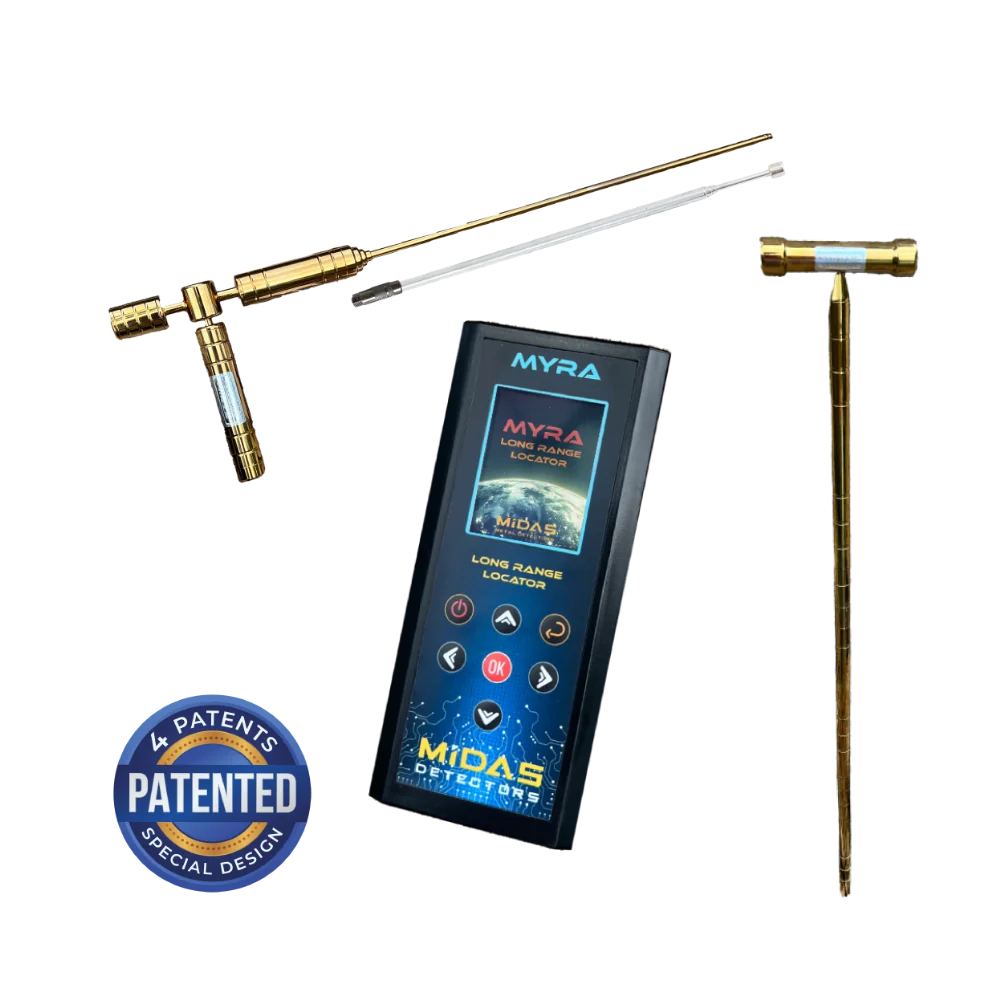
Complete Midas Myra Pro package with control unit, LRL Baton, antennas, cables, charger and carrying bag.
A long range gold locator is a search device designed to help the operator identify a possible target direction across a relatively wide area.
Unlike a conventional metal detector, which usually requires the search coil to pass directly over or close to the target, a long-range detector is commonly used during the early stages of exploration. The operator scans the area and observes the response of the antennas, sensors, display, or directional indicators.
Depending on the model, a gold locator device may offer search programs for:
- Gold.
- Silver.
- Copper.
- Bronze.
- Gemstones.
- Buried treasure.
- Underground cavities.
- Water.
- Ferrous metals.
- Non-ferrous metals.
The device may help narrow a large search area into smaller zones that require further investigation. However, the initial response should always be verified using a direct-detection system, ground scanner, pulse induction detector, or controlled excavation method.
Buyers can compare professional Long range gold locators before selecting a particular model.
Who Should Buy This Detector?
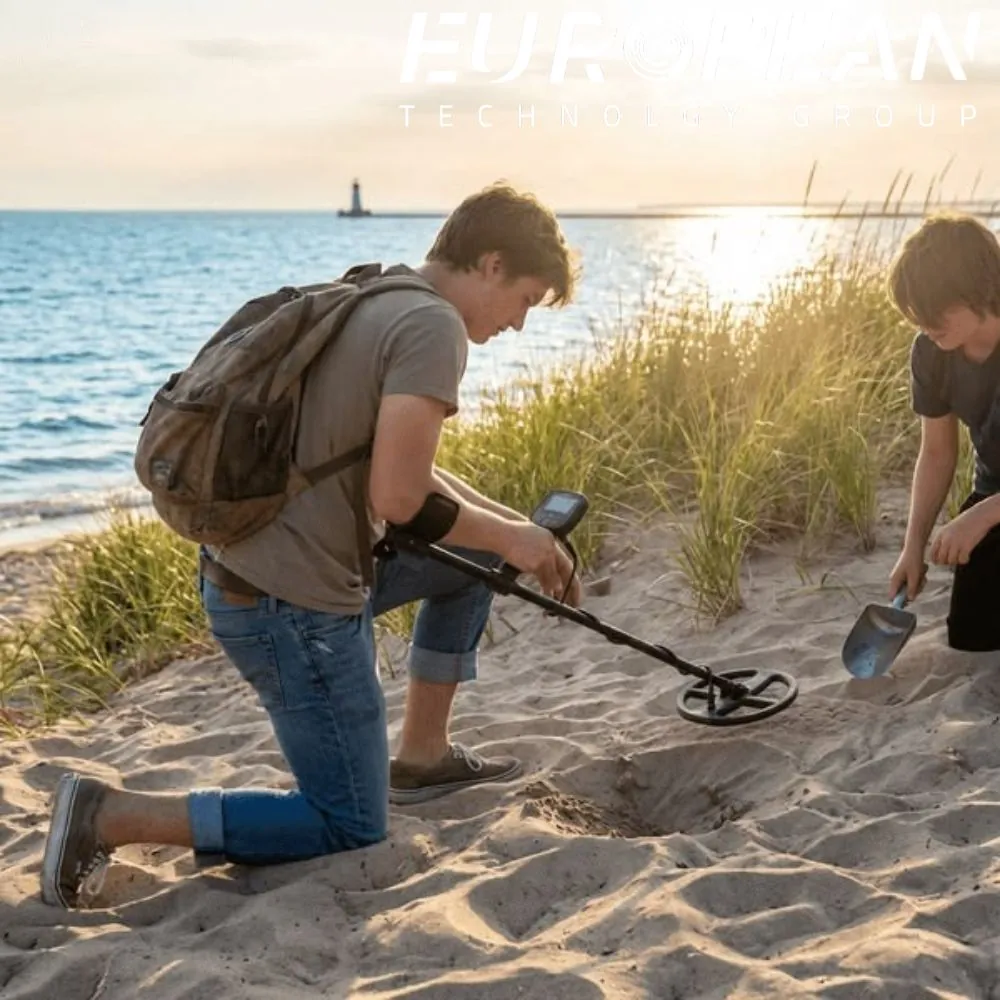
underground gold detector
A long-range locator is generally intended for users who need to explore wide areas before beginning detailed ground scanning.
It may be useful for professional prospectors, experienced treasure hunters, exploration teams, landowners, and users working in remote locations where covering every meter with a conventional coil would require significant time.
A professional locator may be suitable when:
- The search area is large.
- The possible target location is unknown.
- The terrain is difficult to scan with a coil.
- The user wants to identify a general target direction.
- Several target types may be present.
- The search project includes multiple verification stages.
- The operator understands that locator results require confirmation.
A range finder detector is not necessarily the best first device for every beginner. The operator may need to understand calibration, direction confirmation, cross-searching, field interference, and target verification.
Users searching mainly for coins, jewelry, or small natural gold in a limited area may benefit more from a conventional detector. Reviewing different categories of Gold detectors can help buyers decide whether a locator, ground scanner, pulse induction detector, or multi-system machine is more appropriate.
Before buying, identify the exact objective. Searching for a large buried gold target is different from searching for small natural nuggets. These applications may require completely different technologies.
Main Technologies and Search Modes
Long-range systems are sold with different operating technologies. The terminology used by manufacturers may vary, so buyers should ask for a clear explanation of how each system is operated and what type of response it provides.
Common system types include:
| Locator system | Typical function | Important consideration |
|---|---|---|
| Antenna-based locator | Provides directional movement toward a possible target zone | Requires stable handling and repeated confirmation |
| Frequency selection system | Allows the user to select a program associated with a target type | A selected program does not guarantee the exact target metal |
| Ionic detection system | Designed to identify changes associated with long-buried targets | Performance may be influenced by environmental conditions |
| Sensor-based locator | Uses electronic sensors to measure changes in the surrounding field | Correct calibration is essential |
| Directional display system | Shows a possible target direction on a screen | The direction should be checked from multiple positions |
| Multi-system locator | Combines long-range search with another detection technology | Compare each system independently |
| Ground scanning locator | Adds visual or ground-analysis functions | Requires software and interpretation training |
A gold locating system may include several search modes. More programs do not automatically mean better field performance.
The most important question is whether the included modes match the buyer’s search project.
For example, a user searching only for gold may not need a device with many water, gemstone, and cavity programs. In contrast, an exploration company may benefit from a flexible multi-target system.
Before ordering, ask the supplier:
- What does each search mode measure?
- How is the device calibrated?
- Does it require target type selection?
- Can it distinguish between metals?
- Does it display direction, distance, or depth?
- How should the result be verified?
- Is the detector affected by nearby metal?
- Does the operator need to enter soil information?
- Can the device be tested before field use?
A professional locator should be selected according to the quality of its operation, training, support, and verification process—not simply the number of modes displayed in its product description.
Depth Expectations and Soil Conditions
Advertised search distance and depth are among the most important claims to evaluate before you Buy Long Range Gold Locator equipment.
No single depth or range can apply to every target and location. Actual performance may change according to:
- Target size.
- Target metal.
- Burial period.
- Soil mineralization.
- Ground moisture.
- Terrain.
- Nearby metallic objects.
- Electrical interference.
- Weather conditions.
- Calibration quality.
- Device technology.
- Operator skill.
A large buried metal object may create a more noticeable response than a small object. Similarly, a long-buried target may interact with its surrounding soil differently from a recently buried test sample.
The position of the target can also influence the result. A large object positioned horizontally may produce a different response from a narrow object positioned vertically.
Soil conditions should be evaluated before the search begins.
| Ground condition | Possible effect |
|---|---|
| Highly mineralized soil | May create unstable or misleading responses |
| Wet ground | Can change conductivity and field behavior |
| Salty soil | May affect some electronic detection systems |
| Rocky terrain | Can make consistent movement difficult |
| Urban locations | May contain pipes, cables, fences, and interference |
| Agricultural land | May contain scattered metal and disturbed soil |
| Desert terrain | Heat, wind, and dry soil may affect operation |
| Mountain areas | Uneven ground may complicate direction confirmation |
Buyers should avoid any seller who guarantees extreme distance or depth without asking about the target size, test conditions, soil, and verification method.
A responsible product recommendation should clearly explain that depth and range are estimates influenced by multiple field factors.
Key Features to Compare Before Buying
A professional locator should be compared as a complete field system. The number of antennas, screen design, or exterior appearance should not be the only deciding factors.
Search Programs
Check whether the device includes programs relevant to your targets. Common programs may include gold, silver, copper, bronze, gemstones, cavities, and water.
Ask whether the programs can be adjusted or whether they operate with fixed settings.
Calibration System
Calibration prepares the device for the surrounding ground and environmental conditions. Some models use automatic calibration, while others require the operator to complete a manual setup.
Incorrect calibration can lead to unstable movement or misleading results.
Directional Response
The locator should provide a clear method for identifying a possible target direction. Depending on the device, this may involve antenna movement, visual indicators, audio alerts, or screen-based arrows.
The operator should repeat the search from more than one direction. A target zone located from only one starting point should not be considered confirmed.
Distance Settings
Some devices allow the user to select or estimate a search distance. Confirm whether the distance setting changes the device’s sensitivity, search pattern, or target program.
A longer distance setting should not automatically be considered better. Searching a smaller area with controlled settings may provide more manageable results.
Depth Estimation
Certain locators include methods for estimating depth. These may involve specific movements, calculations, crossing points, or software.
Depth estimates should be treated as approximate. They must be confirmed with another detector or scanning system before excavation.
Target Identification
A selected gold program does not always prove that the underground object is gold. Mineralization, mixed metals, buried waste, and environmental interference can create confusing responses.
Target identification should be verified using a direct metal detector whenever possible.
Display and Interface
The device should have a clear, practical interface. Compare:
- Screen visibility.
- Menu design.
- Supported languages.
- Battery indicator.
- Target program selection.
- Search distance options.
- Depth controls.
- Audio and vibration alerts.
- Saved settings.
- Software compatibility.
A complicated interface may slow down fieldwork, particularly when the operator needs to change settings frequently.
Portability
Long-range searches can involve walking across large areas. Compare the device weight, carrying case, antenna length, battery size, assembly time, and comfort during extended use.
Accessories, Coils, and Package Options
Before ordering, ask for a detailed list of everything included in the standard package.
Promotional photographs may show optional accessories that are not supplied with the basic detector.
A typical package may contain:
- Main control unit.
- Search antennas.
- Directional handles.
- Transmitter unit.
- Receiving unit.
- Rechargeable battery.
- Battery charger.
- Car charger.
- International power adapter.
- Headphones.
- Carrying case.
- User manual.
- Training material.
- Warranty certificate.
- Product serial number.
- Software or mobile application.
Some professional locator packages may also include:
- Ground probes.
- Additional sensors.
- Large search coils.
- Pinpoint coils.
- 3D scanning accessories.
- Tablet or smartphone.
- GPS tools.
- Spare batteries.
- Protective covers.
- Tripod or transmitter stands.
The best package depends on how the device will be used.
| Search objective | Useful package features |
|---|---|
| Wide-area preliminary search | Directional antennas and clear distance settings |
| Gold target search | Gold-specific program and confirmation detector |
| Cavity exploration | Cavity mode or compatible ground scanner |
| Remote fieldwork | Spare batteries and protective carrying case |
| Professional team use | Training, software, and multiple sensors |
| International travel | Compact case and compatible charging adapters |
Ask whether optional accessories can be purchased later. Confirm compatibility using the exact model name and serial number rather than relying on appearance alone.
Warranty, Training, and Technical Support
A detector warranty protects the buyer against eligible manufacturing defects and provides a clear repair process.
Before purchasing, confirm:
- The length of the warranty.
- The company providing the warranty.
- The components covered.
- Whether batteries are covered.
- Whether antennas and sensors are covered.
- The location of the repair center.
- Who pays for repair shipping.
- Whether software support is included.
- Whether replacement parts are available.
- Which types of damage are excluded.
The device should be supplied with an original serial number, invoice, package list, and warranty documentation.
Training is particularly important for long-range equipment. Small operating mistakes can affect the direction response and create inconsistent results.
Professional Gold detector training should cover:
- Device assembly.
- Battery charging.
- Antenna installation.
- Correct body position.
- Stable hand movement.
- Ground calibration.
- Target program selection.
- Distance settings.
- Search direction.
- Cross-search procedures.
- Target-zone marking.
- Depth estimation.
- Interference identification.
- Confirmation with another detector.
- Safe excavation planning.
Technical support should remain available after delivery. Buyers may need help during their first practical tests or when working in a new soil environment.
A reliable support team should be able to explain setup, calibration, program selection, battery care, maintenance, and common operating mistakes.
Worldwide Shipping and Delivery Notes
International buyers should confirm shipping details before making payment.
Professional detectors may contain batteries, sensors, antennas, tablets, and sensitive electronic parts that require careful packaging.
Review the Worldwide shipping options and confirm whether delivery is available to your country.
Important shipping details include:
| Shipping detail | What to confirm |
|---|---|
| Destination availability | Whether the company ships to your country and city |
| Delivery company | Carrier name and tracking service |
| Processing time | Time needed to prepare the detector |
| Transit time | Estimated delivery period |
| Insurance | Coverage against loss or damage |
| Customs duties | Whether local import charges apply |
| Battery transport | Whether the battery has special restrictions |
| Package contents | Exact list of included accessories |
| Damage process | How to report a damaged shipment |
| Return shipping | Who pays if a return is approved |
The buyer should provide a complete and accurate shipping address, including:
- Full name.
- Country.
- City.
- Area.
- Street address.
- Postal code.
- Telephone number.
- Email address.
When the package arrives, inspect the external box before opening it. Photograph visible damage and compare every item with the invoice and package list.
Keep all shipping, payment, warranty, and serial-number documents.
Price, Payment Plans, and Quote Process
The price of a professional locator depends on the technology, search programs, sensors, package contents, manufacturer, warranty, training, and delivery destination.
Two devices with similar external designs may have very different capabilities and support packages.
Compare the complete purchase value:
- Original detector.
- Included antennas.
- Sensors and transmitters.
- Software.
- Tablet or smartphone.
- Carrying case.
- Training.
- Warranty.
- Technical support.
- Shipping.
- Customs documentation.
- Future replacement parts.
Before requesting a quotation, prepare information about your project.
The supplier may need to know:
- The primary target.
- Expected target size.
- Possible burial depth.
- Search area size.
- Soil type.
- Terrain.
- Country of use.
- Operator experience.
- Required search modes.
- Preferred verification device.
- Budget range.
- Delivery destination.
Use the Request a quote page to receive a package recommendation based on your requirements.
The written quotation should clearly state:
| Quote item | Required information |
|---|---|
| Detector model | Exact name and version |
| Package | Complete accessory list |
| Condition | New, original, and unused |
| Warranty | Duration and provider |
| Training | Type and delivery method |
| Support | Available after-sales services |
| Shipping | Cost, carrier, and destination |
| Customs | Included or excluded |
| Payment | Accepted method and terms |
| Delivery | Processing and estimated transit |
Do not make payment until the model, package, invoice, warranty, and shipping details are confirmed.
Final Buying Checklist and FAQs
Before you Buy Long Range Gold Locator equipment, complete this checklist:
- Define the main target.
- Identify the expected target size.
- Estimate the search area.
- Review soil and terrain conditions.
- Compare locator technologies.
- Check the included target programs.
- Understand the calibration process.
- Ask how target direction is confirmed.
- Review realistic distance expectations.
- Review realistic depth expectations.
- Select a second detector for verification.
- Request a full accessory list.
- Confirm the warranty.
- Arrange professional training.
- Check technical support availability.
- Confirm shipping to your country.
- Review customs and taxes.
- Request a written quotation.
- Verify the serial number and invoice.
- Avoid guaranteed performance claims without test conditions.
Can a long-range locator identify gold from a distance?
A locator may help indicate a possible target direction or search zone depending on its operating system and field conditions. The result should be checked from multiple directions and confirmed with a conventional detector or ground scanner.
Does selecting gold mode guarantee that the target is gold?
No. A selected program does not provide absolute confirmation of the underground material. Minerals, mixed metals, environmental interference, and operator movement can affect the response.
How deep can a professional locator detect?
There is no fixed depth for every situation. Target size, metal type, burial period, soil, moisture, terrain, device technology, calibration, and operator experience all affect the result.
Can I use a locator without another detector?
It is better to use a long-range locator as part of a multi-stage search. A direct metal detector, pulse induction device, or 3D ground scanner can help verify the target zone before excavation.
Is a long-range detector suitable for small gold nuggets?
A locator is generally used for preliminary searches and larger target zones. Small natural gold nuggets are usually better searched for with a detector designed for gold prospecting and small-target sensitivity.
Why should I search from different directions?
Searching from several positions helps the operator identify a possible crossing point and reduces the risk of following an unstable or incorrect directional response.
Can nearby metal affect the locator?
Vehicles, fences, power lines, phones, watches, tools, pipes, and surface metal may influence some systems. The search area should be checked for possible interference before calibration.
Do I need professional training?
Training is strongly recommended. Correct calibration, antenna handling, movement, cross-searching, and target verification are essential for obtaining consistent results.
What accessories should be included?
The standard package may include the control unit, antennas, sensors, battery, charger, carrying case, manual, training materials, and warranty documents. Request a written list before ordering.
Can the detector be shipped internationally?
International shipping may be available depending on the destination. Confirm customs duties, local taxes, battery restrictions, insurance, tracking, and delivery terms before payment.
A reliable professional locator should support an organized exploration process rather than replace every other detection method. When you decide to Buy Long Range Gold Locator, focus on realistic field expectations, relevant search programs, professional training, warranty coverage, technical support, and a clear plan for confirming every potential target.


