





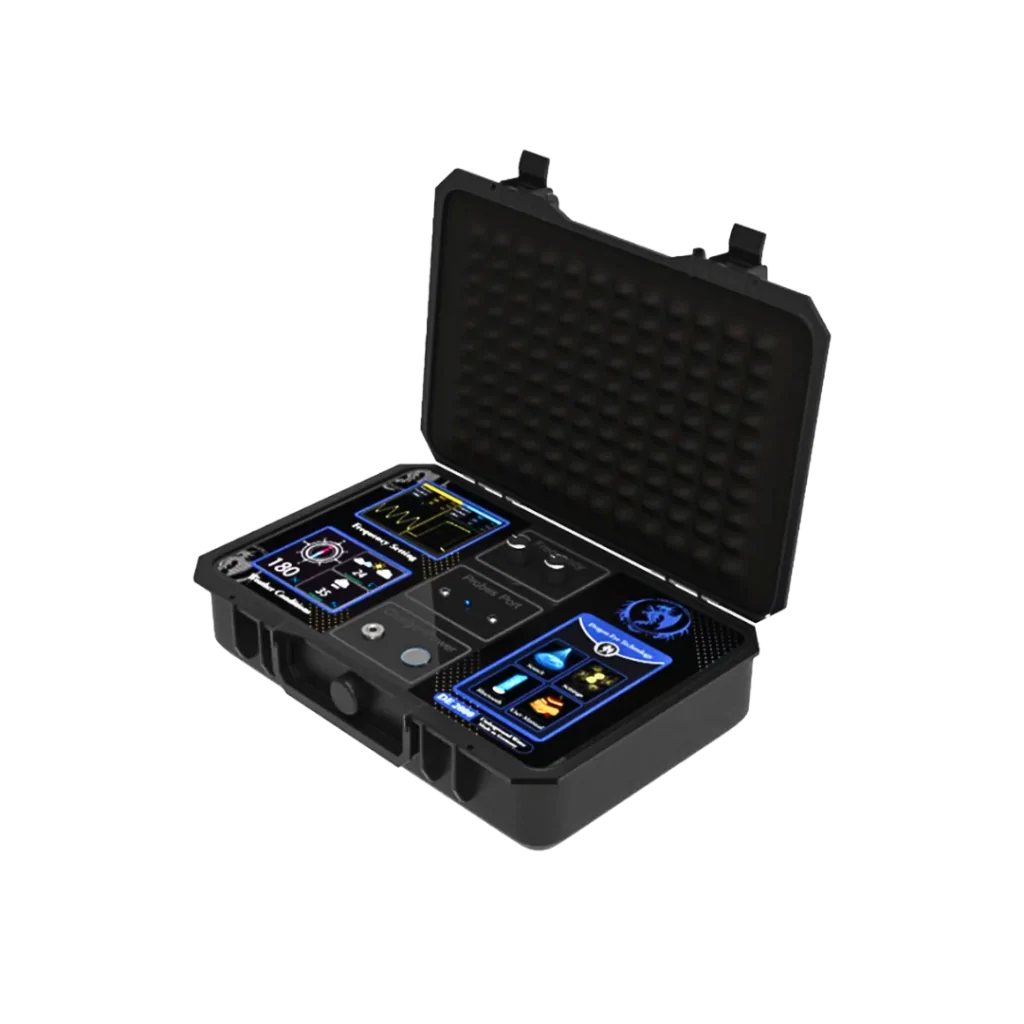
Dragon Eye 2000 Advanced Professional Gold Detector
Dragon Eye 2000 sets a new standard in water detection with advanced Tech, offering unmatched accuracy and
Underground Water Detectors
Best Underground Water Detectors - Shop and Save
The core principle behind most professional water detectors is that water, especially when containing dissolved minerals, can significantly alter the electrical properties of the soil and rock around it. By using an electrical resistivity survey, these devices pass an electrical current into the ground through a set of electrodes and measure the resistance (or resistivity) of the subsurface.
Areas with high water content, which often contain dissolved salts and minerals, will have lower electrical resistance compared to dry rock or sand. The data is then processed and mapped to identify potential aquifers or water veins.
Another advanced method is Proton Magnetic Resonance (PMR), also known as Nuclear Magnetic Resonance (NMR) sounding. This technology uses the Earth's magnetic field to detect the presence of water molecules.
The device sends an electromagnetic pulse into the ground, which excites the hydrogen protons in water molecules. When the pulse is turned off, the protons relax and emit a measurable signal. The frequency and decay of this signal provide information about the quantity and depth of the water present.
Frequently Asked Questions
Farmers and agricultural professionals. Geologists and hydrologists. Construction and engineering firms. Environmental consultants. Well drillers. Mining and oil companies.
They primarily work by measuring the electrical resistivity of the ground. Water-saturated areas have lower electrical resistance, and the detector maps these changes to pinpoint potential water sources. Other advanced models use seismic or proton magnetic resonance technology.
No. A standard metal detector is designed to detect metal objects by identifying their electromagnetic properties. It cannot detect the presence of water or determine a water table's depth. They operate on completely different principles.
It can reach a height of 250–1200 meters.
The most common technology is electrical resistivity surveying. This method involves using electrodes to pass an electric current into the ground and measure the resistance. Lower resistance often indicates the presence of water.
Yes, when used correctly by trained professionals, these devices are highly accurate. However, their effectiveness can be influenced by factors like soil type, mineral content, and the depth of the water source. Interpretation of the data is a crucial part of the process.
They are mainly used by geologists, hydrogeologists, groundwater exploration companies, and drilling contractors. They are essential tools for finding new water sources for wells, mapping aquifers, and conducting environmental surveys.
The size of the search coil can affect the detection depth or sensitivity of the metal detector. The larger the coil, the deeper it will detect, but it is less sensitive to small targets. Conversely, the smaller the diameter of the search coil, the higher its sensitivity, but the detection depth is reduced. Smaller coils are lighter, easier to control, and can be selected for their ability to negotiate difficult terrain or bushes. This is also considered an advantage in areas with high sloping ground.
The effective depth varies significantly depending on the device and the technology used. Some advanced resistivity and PMR systems can detect water sources at depths ranging from tens to several hundred meters, far deeper than typical metal detectors can reach.


